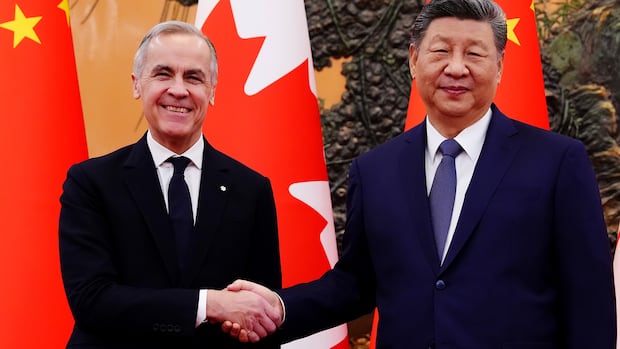
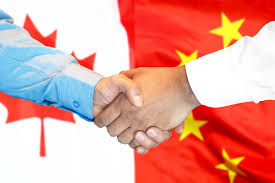
I’m sure everyone has heard the news, so let’s dig into it. Canada has entered a new trade agreement with China. Let’s start with some facts.
China is the world’s second largest economy and is Canada’s second largest single-country trading partner with trade of goods and services totalling $130.9B in 2024. The trade agreement is a short agreement expiring in three years, at which point a review will be performed as a means to determine whether the trade relationship in practice is working for both sides. Canada and China also have agreed to continue work in the upcoming months on additional trade irritants.
Canola Seeds
By March 1st, 2026, China is expected to lower tariffs on Canadian canola seeds to a combined tariff rate of 15%, down from 84%, giving Canadians access to an approximately $4 billion market that China imports annually. This is primarily a win for Saskatchewan, Alberta, and Manitoba who grows over 99% of the nation’s canola seeds.
Canola Meal, Lobsters, Peas, Crabs, and Other Products
By March 1st, 2026 to the end of the year, China is expected to drop it’s anti-discrimination tariffs for Canadian seafood harvesters and agriculture goods, benefiting British Columbia and Atlantic Canada by granting them access to approximately $2.6 billion China market.
Steel & Aluminum
Canada is temporarily allowing imports of 66 product lines of steel and aluminum and their derivative products that are either in low or have no supply in Canada, meaning they are not made by Canadian producers in sufficient volumes. This policy takes effect March 1st, 2026 and expires at the end of the year. However imports from January 1, 2026 are also retroactively applicable.
It is worth noting that our main supplier of these products are United States, so by removing tariffs on Chinese products is giving the United States more direct competition to Canadian markets.
Electric Vehicles
Canada to provide an import quota of 49,000 electric vehicles (EVs) per year, with a tariff rate of 6.1% down from 100%. This applies to only EVs with an import price (not to be confused with the retail price) of $35,000 CAD or less. The intent of this policy is to put focus on lower-cost entry-level EV models into Canada, instead of spending the quota with premium high-cost vehicles. The quota represents approximately 3% of the market of new vehicles sold in Canada, based on 2023-2024 numbers.
The goal of this policy is to provide an entry for Chinese vehicles into the Canadian market. The quota restrictions in-place protects existing Canadian auto industry in Ontario and provides an opening to expand trade talks. BYD is the main player in China’s EV market and they opened EU auto factories to produce BYD EV vehicles for the local EU markets. So this policy opens the door for a similar deal to be present for the Canadian market, which would likely benefit Ontario. Obviously work still needs to be done.
EVs may not be for everyone, but the Canadian market for EVs has been steadily growing, with the main bottleneck being the price tag at an average of $70,000 before any rebates or other incentives.
Trade Diversification
All in all, this deal touches the economies from coast to coast across Canada, by expanding market access in their key industries. Broadening access to goods that might have otherwise be only available through to the United States due to tariffs previously pricing out all other sources. Canada aims to increase exports to China by 50% by 2030. In concrete numbers, 2024 Canada exported appoximately $30b in goods, so a 50% increase in exports would be approximately $45 billion by 2030.
China as an Adversary
It is true that China can be adversial. That’s one reason why this trade agreement is short lived without further discussions. Need I to remind that in geopolitics, there are no friends, there are simply national interests. China is aggressive to Taiwan and the Philippines and to me that is definitely concerning.
In May 2024, CSIS concluded that Chinese governmented interferred in both 2019 and 2021 elections. It doesn’t take CSIS to tell you that foreign interference in elections is probable.
China yields incredible economic leverage and dependency risk, as Mark Carney pointed out during his election campaign, when he called China a national threat. As China is:
major export destination
dominant manufacturing hub
geopolitical actor willing to use trade coercion
Things that Canada has already experienced with Canola, pork and agriculture import bans and arbitrary economic policy actions tied to diplomatic disputes. Some of these things is actually addressed in this trade agreement.
Does this make China trustworthy? Well to a degree, because China doesn’t take bizarre action “just because”, there is always a cause-and-effect. In comparison to the other world economic power, the United States, China is far more stable and dependable, in contrast to the last decade of American leadership proving that agreements are not worth much as any agreement can be abruptly scrapped as the states shift from adminstration to administration with drastically different ideologies.
None of these means we shouldn’t conduct business with China, we just simply need to be diligent. It is worth noting that we already do significant trade with China and aren’t taking a much greater risk than we already are. If you’re someone that believes foreign election interference is a show-stopper, then let’s explore that in my closing remarks.
Foreign Interference
Foreign interference can be identified when any or a mixture of the following activities takes place, with the intent to persuade domestic policy or voter intent.
Censorship: The suppression of speech, public communication, or information. This may be done on the basis that the information is harmful, obscene, or politically inconvenient depending on perspective.
Coercion: The use of threats, force, or manipulation to compel individuals to act in ways that further their objectives.
Covert Influence: Foreign states who use deception or power to secretly affect, control or manipulate their adversaries to further their own state’s objectives.
Cultivation: As part of a long-term recruitment plan, individuals who are in a position of influence, or have knowledge or access to information, are actively sought after. In a process known as cultivation, the individual is groomed for an eventual request or “favour”.
Deception: When threat actors cause an individual to believe something that is not true in order to further their objectives.
Discredit: Threat actors may cause others to question or refuse to believe in an individual or something that the individual said or did in order to further their objectives.
Disinformation: The deliberate spread of false or manipulated information with the intent to mislead others.
Interference: Foreign states who use deception or power to secretly hinder or impede their adversaries to further their own state’s objectives.
Manipulation: A form of coercion where individuals or information are controlled to shape behaviour, outcomes or decision-making processes.
Propaganda: An organized program of publicity using selective information to propagate a doctrine of belief, often in a misleading or dishonest way.
Proxy: An individual or entity that is not directly linked to a foreign state, but acts on its behalf.
Recruitment: Typically after a process of successful cultivation, individuals will be asked to complete a “favour” for a threat actor. Some individuals may be compensated with money, assets, or career progression for assisting the threat actor, while others may not be aware that they have been recruited.
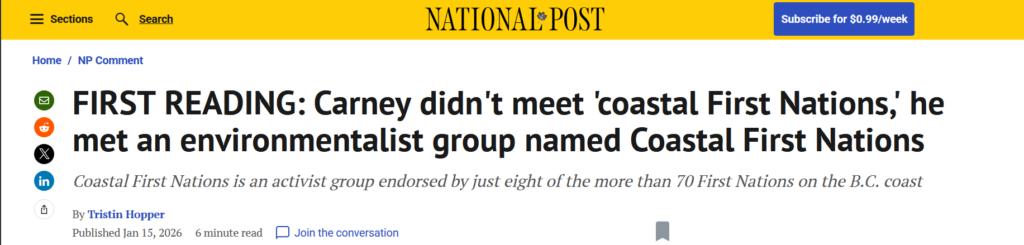
Postmedia Network Canada Corp. as a American-owned media holding company that has over 130 news organizations operating in Canada. Collectively they are the biggest news agency reporting in Canada to push American interests. They do this by passing off opinion pieces as news stories, where they can say anything and be protected under Canadian free speech laws as they are simply commentary and not actual journalism, where there is legal accountability when reporting on news in regards to what is factual. (For the record, I am also a commentator).
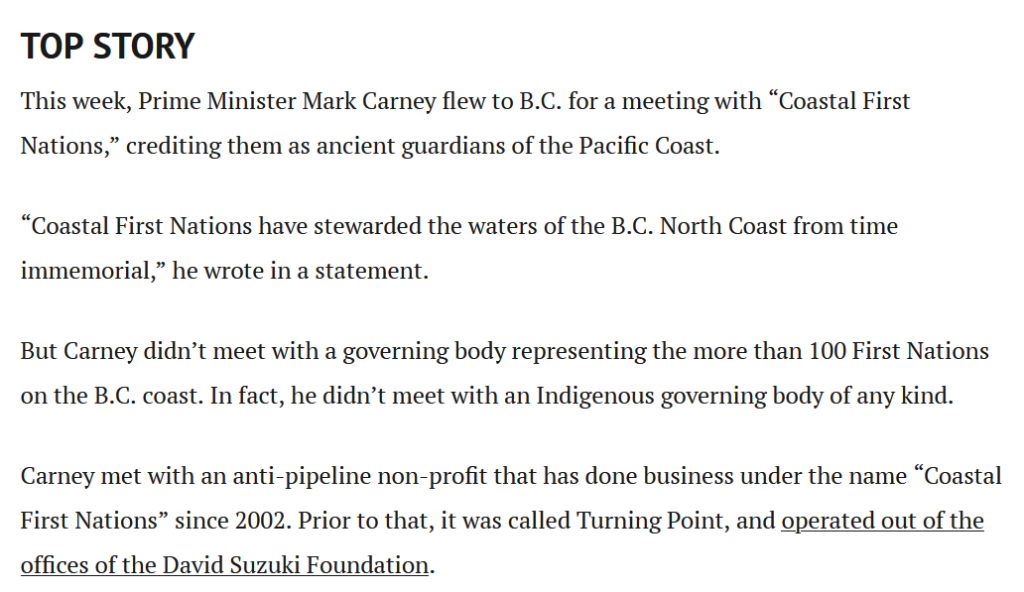
Using commentary pieces, they are free to spread disinformation and American propaganda without any consequences, other than perhaps personal ones. Here is an example of a Discredit piece:
Today, the Prime Minister, Mark Carney, met with the President of the Coastal First Nations-Great Bear Initiative (CFN), Chief K̓áwáziɫ Marilyn Slett, and leadership from the CFN. Their discussions focused on how the federal government and the CFN can work in partnership to strengthen marine conservation and ocean protection, and to build a strong and sustainable economy.
I’m already disgressing long enough, but there are important reasons why Carney is in talks with this particular group in relation to the pipeline. And the purpose of this piece appears to discredit any indication that Carney is actually trying to get a pipeline built — allowing American media to continue their talking point that liberals don’t want pipelines.
The point is, we have influence all over, especially from the United States. Canada must stand up for themselves to decide the best path forward. In foreign influence is enough of a reason to not trade with China, then it should be strong reason to diversify trade from the USA for doing the same thing. Anybody making this argument wouldn’t be that consistent however.
To provide the best experiences, we use technologies like cookies to store and/or access device information. Consenting to these technologies will allow us to process data such as browsing behavior or unique IDs on this site. Not consenting or withdrawing consent, may adversely affect certain features and functions.
Functional
Always active
The technical storage or access is strictly necessary for the legitimate purpose of enabling the use of a specific service explicitly requested by the subscriber or user, or for the sole purpose of carrying out the transmission of a communication over an electronic communications network.
Preferences
The technical storage or access is necessary for the legitimate purpose of storing preferences that are not requested by the subscriber or user.
Statistics
The technical storage or access that is used exclusively for statistical purposes.The technical storage or access that is used exclusively for anonymous statistical purposes. Without a subpoena, voluntary compliance on the part of your Internet Service Provider, or additional records from a third party, information stored or retrieved for this purpose alone cannot usually be used to identify you.
Marketing
The technical storage or access is required to create user profiles to send advertising, or to track the user on a website or across several websites for similar marketing purposes.