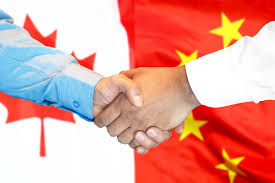
Canada-China is something that we’ve already talked about previously, see https://poliment.ca/2026/01/17/canada-china-trade-deal-2026/ if you’ve missed it. Here, we are going to talk about FTA, FIPAs and why Canada does not have a free trade agreement with China.
First what is an FTA? FTA stands for a Free Trade Agreement. It has a legal definition under the WTO rules. To have a FTA, the agreement must:
“Eliminate duties and other restrictive regulations of commerce on “substantially all the trade” between the parties.”
The agreement must eliminate most or all tarrifs between member countries and covers most sectors. An example of a FTA that Canada has is CUSMA. CUSMA eliminates tariffs in most sectors.
What Canada has with China is not a FTA. It does eliminate some tariffs in very select industries, but most sectors still have tariffs — on both sides. The Canada-China trade deal does not fit WTO’s definition of free trade.
The Canada-China trade deal is a FIPA. A Foreign Investment Promotion and Protection Agreement. It only covers specific sectors or sub-sectors. For example China agreed to remove tariffs on agriculture, specifically pork and seafood products, and reduced tariffs for Canola. Canada reduced tariffs on imported EVs, for specific EVs (import price of $35k CAD or less) and with a quota of up to 49,000 units per year.
So how does this relates to CUSMA? Well there is clauses that prohibits any party within CUSMA from making FTA’s with any non-market country. A non-market country is a country that is not participating in CUSMA. So basically every country except for Canada, United States, and Mexico. Should any party entering a FTA with a non-market country is subjected to review by other party members and who may impose consequences. The whole idea is to prevent non-market trade to enter into the economies of within the partnership trade. This is in reference to Article 32.10 if you want to read the full text of the agreement.
If Canada were to enter a FTA with China, the agreement will be subject to review by Mexico and the USA and they could require changes, apply penalties or worst case scenario, eject Canada from CUSMA altogether under Article 32.10. But Canada is not entering a FTA with China, and likely won’t enter a FTA anytime soon.
The trade relationship Canada has with China is not new, but it weakened during Trump’s first term in 2018 after the United States applied economic pressure against Canada. Following demands of the United States, Canada arrested Meng Wanzhou and some of the consequences of that was rapid deterioration of our trade relationship with China. Including banning canola and meat and creating other administrative challenges. Another example why following the United States lead has not been working out in Canada’s favor in recent years.
The 2026 deal have restored some of what Canada had lost — but naturally with a cost of allowing EV imports. However that may turn out to be a bigger win in the future if Canada can play it’s cards right.