Mark’s proposed tax cut is pretty simple. Simply a 1% tax cut on the first tax bracket. That means that the first $57,375 that is earned (assuming the tax brackets do not change by the next tax season), will be taxed at 14% instead of 15%.
Pierre’s proposed tax cut is a 15% cut, but I haven’t found any details in what brackets he is going to be cutting to make up that 15%. Certainly the entire first tax bracket won’t be cut. The conservative website states “Poilievre announced he will cut income tax by 15%, dropping the tax rate on the lowest income tax bracket from 15% to 12.75%”. But that’s 2.25% tax cut on the lowest income bracket. The remainder 12.75% hasn’t announced in writing.
It’s important to note that the last conservative government had a tax bracket policy that looked like this:
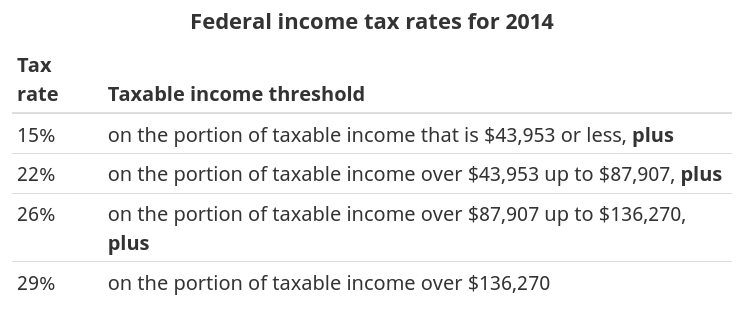
In 2016, the Trudeau liberal government gave a middle class a tax cut via cutting the second bracket from 22% to 20.5%, and increasing the first bracket by about $2000 so that more money is taxed at 15% instead of 20.5%.
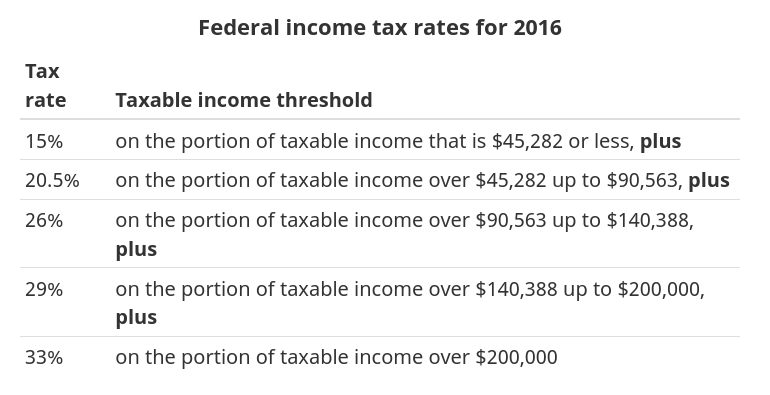
Fast forward to 2025, further tax cuts were done. The individual bracket % haven’t changed, but the first tax bracket includes the first $57,375 up from $45,282. This means more of your income is taxed at a lower rate.
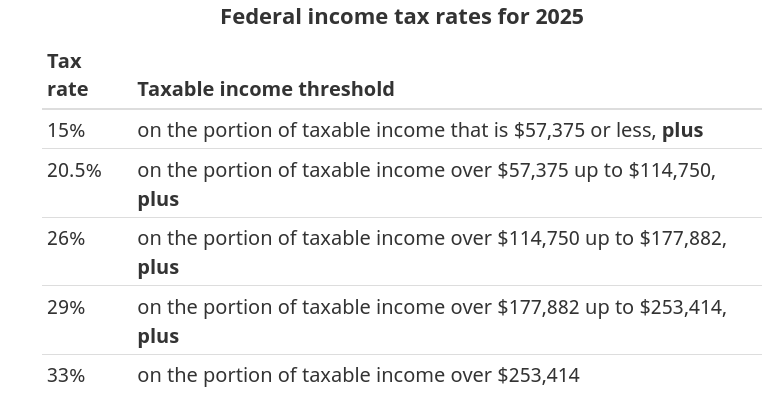
(Tables from canada.ca)
The national average gross income is $70,000. As you can see, the Liberal party as a history of reducing the tax burdens on the average worker either by reducing the tax % on the lower brackets or increasing how much of the income is taxed at a lower tax bracket.
Pierre hasn’t told us which tax brackets are going to be cut, and out of his claimed 15% cut, 12.75% is still up in the air. If he isn’t telling you, these tax cuts are probably not for you. As you can see above, the liberals did have tax increases, but they are only applicable to the wealthy who are earning significantly more than $250,000. I don’t think it’s a stretch for the conservatives to revert the 33% tax bracket, but it does remain to be seen.
For a political party that talks a lot about the budget deficit, cutting income tax by 15% is a significant decrease of federal government revenue and Pierre has stated no policy of how they will replace that revenue. But he has talked about cutting federal programs like the CBC, the Housing Accelerator Fund, and conservatives has a history of cutting healthcare services and funding. Both the former Conserative Premier Blaine Higgs conducted funding cuts which includes cutting healthcare. Doug Ford, has previously cut healthcare funding as well.
So this leads me to my final point. Tax cuts is not always better. If the tax cuts means cuts in programs that we use, it could mean requiring us to spend more out of pocket for services. If a tax cut means cutting programs, then you have to consider if the tax cut gives you enough value to cover more than the cost of cutting an assistive program.
At a time where the U.S. is causing economic instability, cutting programs is a risky chance to take. Mark’s policy while is much more simple, and is a less of a tax cut than Pierre’s, Mark is not threatening to cut programs that the average worker might be taking an advantage of.